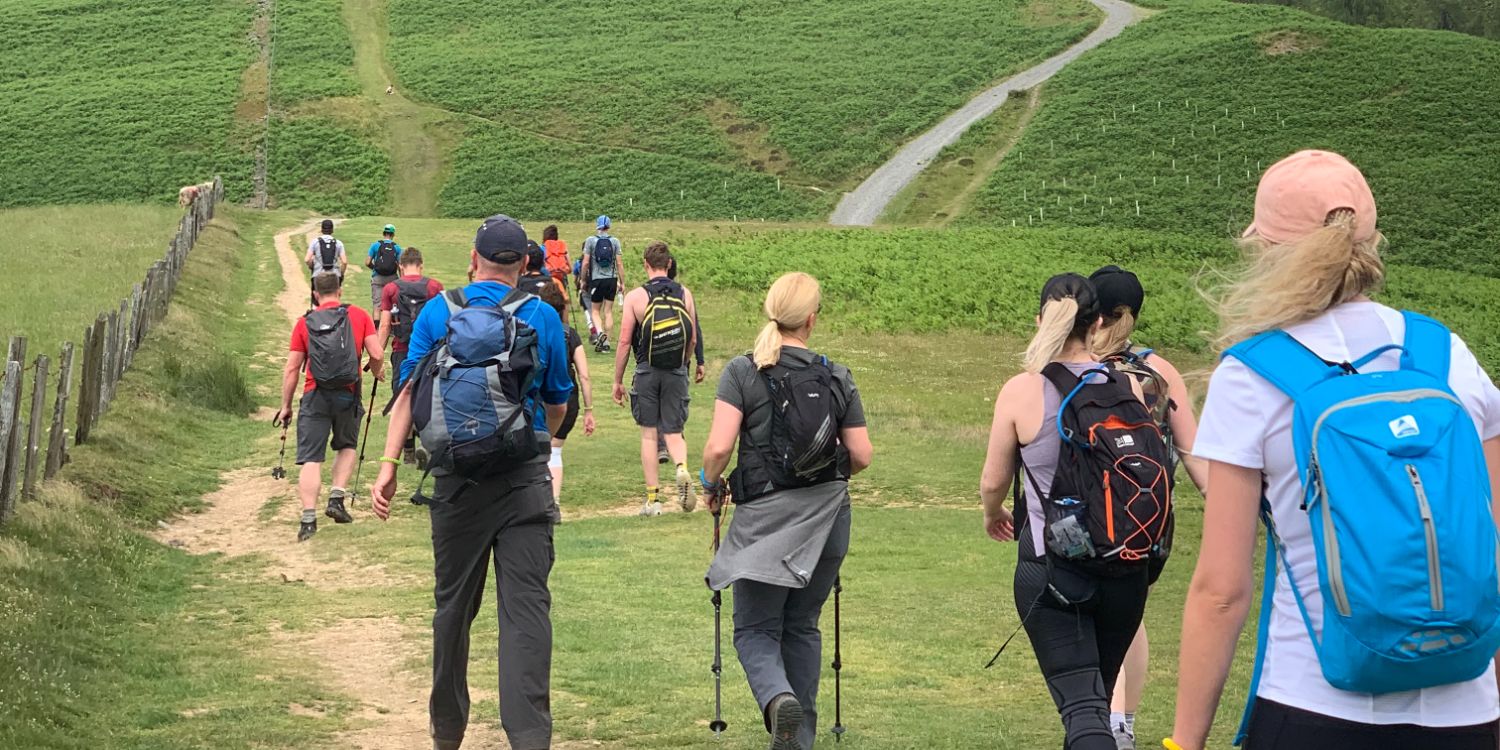
Picture your team on on a beautiful footpath on the rolling hills of the Cotswolds.
No agenda on a screen. No notifications. No camera-off video calls.
Just fresh air, a shared pace, and conversation that actually goes somewhere.
People talking — really talking — in a way that hasn't happened in months.
No agenda on a screen. No notifications. No camera-off video calls.
Just fresh air, a shared pace, and conversation that actually goes somewhere.
People talking — really talking — in a way that hasn't happened in months.
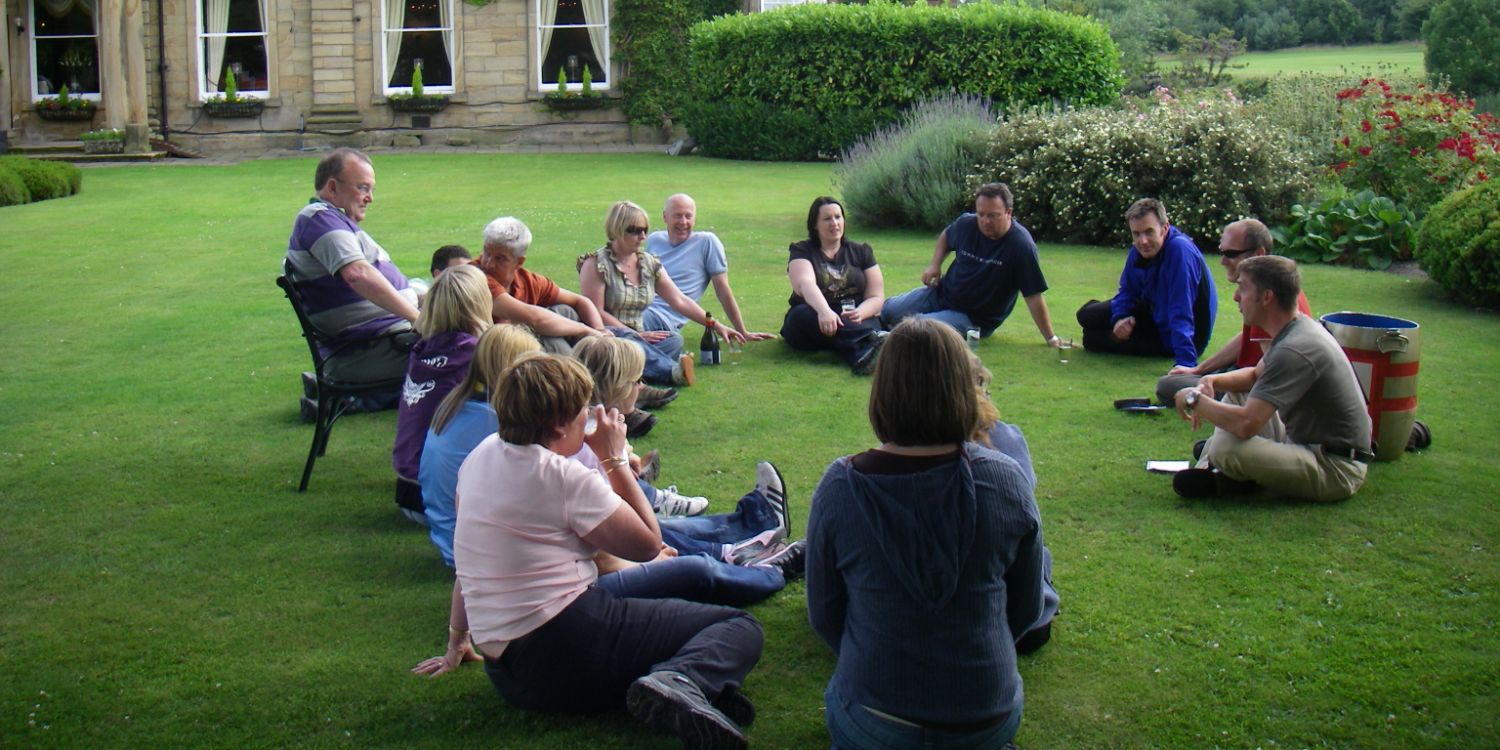
Now picture the same team on a Tuesday morning.
Eight people on a video call. Half with cameras off.
Someone answering emails while a colleague presents.
A chat message pops up. A notification.
Everyone technically present. Nobody really there.
This is the paradox of modern work.
We have never been more digitally connected — and yet for many people,
work has never felt lonelier.
The loneliness problem hiding in plain sight.
Loneliness at work isn't just a personal problem — it's a performance problem.
Research consistently shows that lonely employees are less productive, more likely to leave, and more susceptible to burnout.
Studies suggest that more than a fifth of UK workers regularly feel isolated at work — a figure that has risen sharply since hybrid working became the norm.
The problem isn't working from home per se.
It's the slow erosion of the informal moments that build real human connection — the hallway conversation, the shared lunch, the knowing glance across the table.
These aren't luxuries. They are the invisible architecture of a functioning team.
When those moments disappear, something subtle but significant shifts.
People stop trusting. They stop taking risks.
They start to feel like lone workers — not in the official health-and-safety sense,
but in a deeper, more human one.
Why getting outside changes everything.
We've been taking teams outdoors for over 25 years — into the Yorkshire Dales, the Peak District, the Lake District, the Scottish Highlands and beyond.
And one of the most consistent things we observe is this:
shared time in nature reconnects people faster than almost anything else you can do.
The evidence backs this up.
Time outdoors reduces cortisol, lowers anxiety, improves mood — and increases openness and creative thinking.
When people step out of their habitual environment, they step out of their habitual ways of relating too.
Hierarchies soften. Defences drop. Conversations go deeper.
Walking side by side rather than sitting opposite each other changes the dynamic entirely.
We've witnessed some of the most honest, productive professional conversations imaginable —
not in boardrooms, but on footpaths, with the wind up and the views wide open.
What organisations can actually do about it.
Addressing workplace loneliness isn't about forcing fun or mandating social events that nobody asked for.
It's about creating the conditions for genuine human connection —
and that usually means getting people out of the building.
Guided well-being walks and walk-and-talk workshops.
Moving together in nature is one of the simplest and most effective ways to break down workplace barriers.
Our guided walks are purposefully facilitated — not just a stroll, but a structured experience designed to open up conversation, build trust and leave people feeling genuinely recharged.
Well-being culture workshops.
A one-off wellness talk doesn't shift culture.
What does is creating regular rituals — workshops woven into the working year that give people permission to reflect, reset and reconnect.
We design these around your team's real challenges, not a generic template.
Back to What Matters retreats.
For teams who need more than a day — a deeper reset that combines outdoor experience with genuine reflection and facilitated conversation.
Designed for teams who are ready to do something meaningful, not just tick a well-being box.
Connection isn't a nice-to-have.
The teams that perform best aren't necessarily the ones with the smartest people or the biggest budgets.
They're the ones where people actually trust each other —
where someone will pick up the phone instead of sending a passive-aggressive email,
where a colleague's struggle gets noticed before it becomes a crisis.
That kind of culture doesn't happen by accident.
And it doesn't happen on a screen.
If your team is quietly struggling with disconnection —
or if you're simply wondering why engagement feels flat despite your best efforts —
it might be time to take them outside.
....Not to escape the work. To do it better.
Fire Events designs and delivers well-being culture programmes, guided walk and talk workshops, and Back to What Matters retreats —
helping teams across the UK reconnect with each other and with themselves.
Based in Yorkshire. Operating nationwide.
Ready to build a well-being culture that actually means something?
Let's talk.

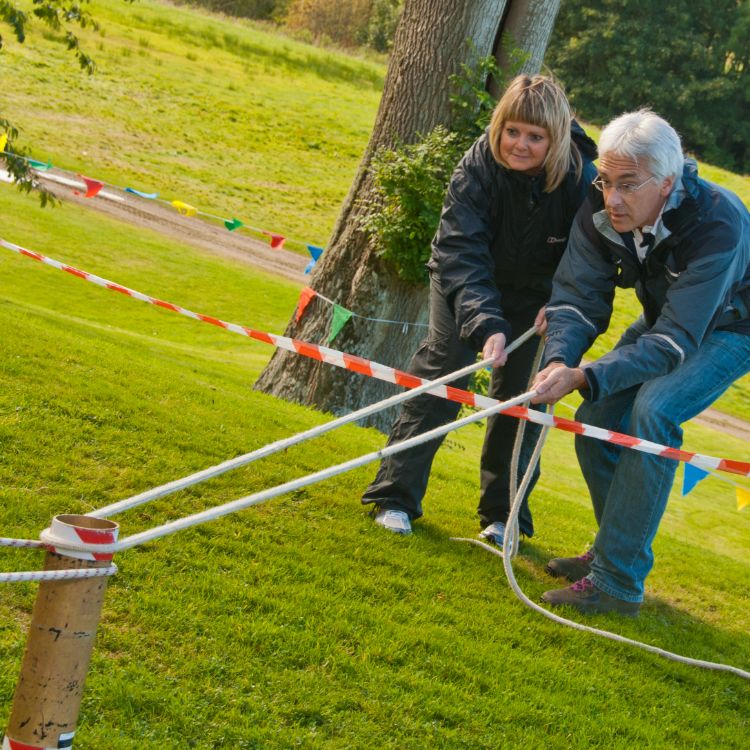
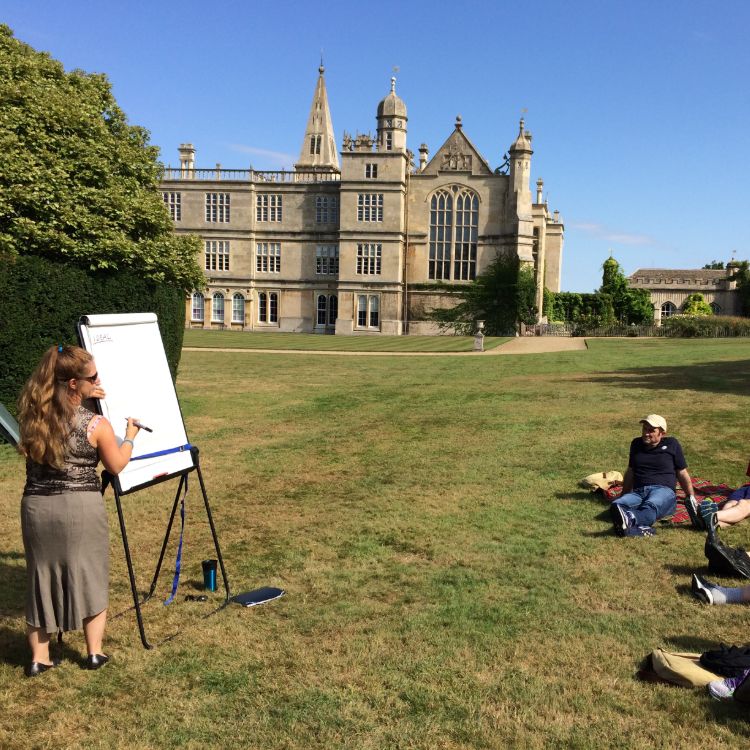
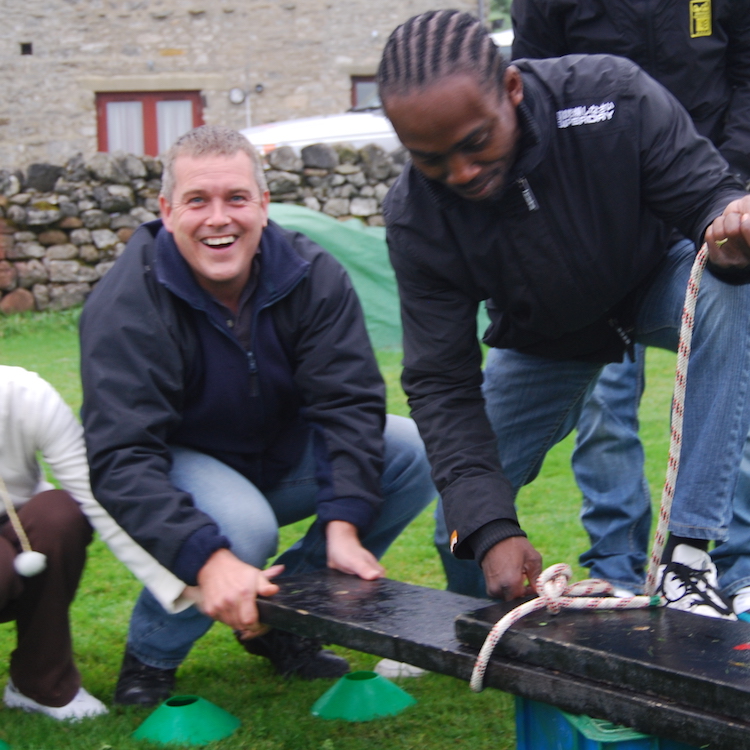
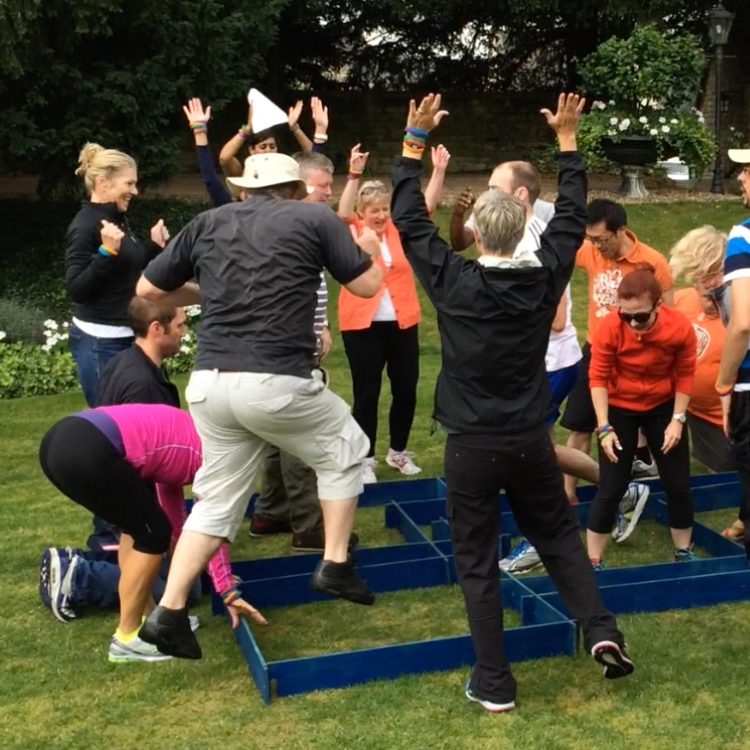


> From the comforts of the hotel meeting room to the wide open spaces of the countryside.
> What does your team need after three very uncertain years?
#wellbeing #mentalhealth #backtowhatmatters